1. Describe your project, your place, and its inhabitants (including animals):
(for English scroll down)
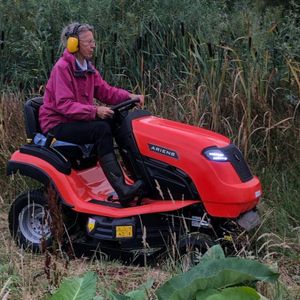
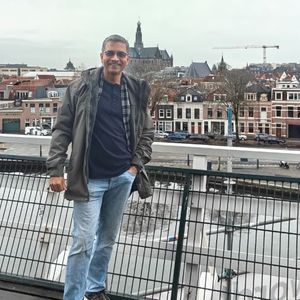
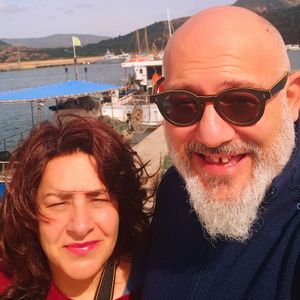
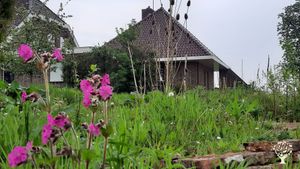
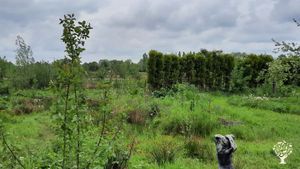
Ons terrein is 0,6 ha gelegen in het buitengebied van een klein dorpje in Drenthe, omringd door agrarische velden. Sinds 2020 zijn wij (Lucas 64, Annette 61) bezig zelfvoorzienend te worden op basis van biologische principes. Start was een schapenweiland dat nu beplant is met bomen, struiken en bloeiende planten. Verder wonen in de tuin veel muizen, mollen, een paar krielkippen, fazanten, kwartels en zangvogels, marters en slakken, insecten en spinnen. Alles mag hier leven. Helaas komt er wel eens een vos wat kippen ophalen. 1 km verderop is een boomgaard met 120 appel- en perenbomen.
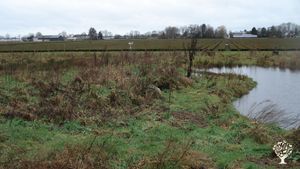
Naast het doel om zelfvoorzienend te worden, zijn tevens doelen: bevorderen van biodiversiteit en onderzoeken van teeltmethoden m.b.v. elektrocultuur en vitalisatie, muziek, communicatie met planten en natuurwezens en gebruik makend van de biodynamische kalender. We hebben een bron geslagen en recyclen regenwater via een grote schelpenbak en een vijver. De vijver bestuderen we in zijn eigen ontwikkeling van vers gegraven met alleen grondwater erin tot nu een bio-systeem met alle leven dat er stap voor stap vanzelf in komt, en een wisselend waterniveau afhankelijk van de regen en de grondwaterstand. We proberen de gewassen alleen natuurlijk water te geven, dat pompen we onder het huis uit de kruipkelder, en uit de vijver. Overigens krijgen alleen zaaibedden en groentebedden water. De rest doet het vanzelf en is ongeorganiseerd en groeit wild door elkaar.
Hoewel dit misschien lijkt op een retraite oord, wordt hier hard gewerkt en pas geluierd als het werk klaar is. Als je last hebt van te warm of te koud of te nat weer, of gevoelig bent voor hooikoorts, dan is dit geen goede plaats om verblijf aan te vragen.
English:
Our site is 0.6 ha located in the outskirts of a small village in Drenthe, surrounded by agricultural fields. The language we speak in the Netherlands is called Dutch and like German it is a Germanic language. We are able communicate in basic English, German and Italian. Since 2020 we (Lucas 64, Annette 61) are becoming self-sufficient based on organic principles.
Start was a sheep pasture that is now planted with trees, shrubs and flowering plants. Furthermore, in the garden live many mice, moles, a few bantam chickens, pheasants and songbirds and snails, insects and spiders. Everything is allowed to live here. Unfortunately, sometimes a fox comes to pick up some chickens. 1 km away is an orchard with 120 apple and pear trees. In addition to the goal of becoming self-sufficient, goals are also to promote biodiversity and research into cultivation methods using electroculture and vitalization, music, communication with plants and nature creatures and using the biodynamic calendar. We have a well and recycle rainwater through a large shell bin and a pond.
We study the pond in its own development from freshly dug with only groundwater in it to now a bio-system with all life that comes into it step by step, and a varying water level depending on the rain and the groundwater level. We try to water the crops only naturally, which we pump under the house from the crawl cellar, and from the pond. By the way, only seedbeds and vegetable beds are watered. The rest will grow by itself and it is rather wild not organised.
Although this might look like a retraite site, the wwoofers are expected to work hard. Laying done is possible only after the work is done. If you suffer from hayfever, or dislike warm or cold or wet weather, this is not the place to be for you.
2. List the activities that WWOOFers will participate in and what you want to teach them:
Afhankelijk van je mogelijkheden en interesse kun je kiezen uit verschillende activiteiten. Dagelijkse werkzaamheden in de tuin. Zaaien, verpoten, wieden, oogsten, water geven, snoeien, versnipperen, composteren, met natuurlijke materialen bouwen. Insecten en planten determinatie en telling. Kruiden drogen, tincturen maken, thee-mengsels maken, kruidenthee toepassen voor bevordering plantgezondheid. In oktober is er een grote appel-en peren oogst en zijn we bezig met het verwerken van de appels tot appelmoes en appeltaart en de peren worden gestoofd. We verwachten dat je naast het vele werk ook het tuingereedschap en je eigen kamer netjes houdt. Dit kan een cultuurshock voor je zijn.
Leren: planten onderscheiden, geneeskrachtige eigenschappen en communiceren met planten en natuurwezens; het belang van de bodem en het bodemleven en waar dit door wordt beïnvloedt. Verschillende bemestingsmethoden. Natuurlijke materialen gebruiken voor van alles. Zelf medicijnen maken, (insecten)muurtjes bouwen, wilgenhout vlechten, touw van plantenvezels maken, etc.
English:
Depending on your possibilities and interest, you can choose from different activities. Daily work in the garden: Sowing, repotting, lots of weeding, harvesting, watering, pruning, shredding, composting, building with natural materials. Insects and plants determination and counting. Drying herbs, making tinctures, making tea blends, applying herbal teas to promote plant health. We expect you to keep your own room tidy and change your bed at least 1x a week. Learning: distinguishing plants, medicinal properties and communicating with plants and nature creatures; the importance of soil and soil life and what this is influenced by. Different methods of fertilization. Using natural materials for everything. Making your own medicines, building (insect) walls, braiding willow wood, making rope from plant fibers.
These activities are planned according to the time of year, so it is impossible to experience it all in a one weeks visit. In June we make the sparkling wine and sirup of the Elderflowers, harvest the cherries just before the birds do, and we plant the last beans, cauliflower, leeks, cucumbers and brocoli and sow the chicory . A lot of weeding is to be done (all by hand) to discover the new flowers, and strawberries and raspberries that are hidden under the grass, which was to protect them from the dry wind. We give cow-manure to the crops that need it. In the beginning of July we will harvest the berries and make juice of it.
In october we harvest a lot of apples and pears and process them.
Apart from the hard work in the garden, we expect you to keep the gardentools tidy. There are some topics of (we think valuable) knowledge that we like to pass on: 1. a workshop on the processing of propolis and 2. knowledge about the ACE study and braindevelopment. We try to organise this for every Wwoofer is interested.
3. What could a WWOOFer's day look like at your site (time slot for participation in activities, expectations...)?
Afhankelijk van de zwaarte van het werk een korte of een lange dag. Per 7 dagen minimaal 30 uur. Of naar keuze een paar hele lange dagen en de rest van de week vrij om Nederland te ontdekken. Het is niet nodig om vroeg op te staan, tenzij je niet tegen de warmte kunt. We eten gezamelijk.
English:
Depending on the intensity of the work, around 6 hours per day, minimum 30 hours per 7 days. Or a few long days and the rest of the week free to discover the Netherlands. There is no need to get up early, unless you cannot stand the heat. We have our meals together.
4. Play the guide! Talk about your own hobbies (music, cooking, etc.) and those possible around (hiking, swimming, etc.):
We like classic music and clasic rock and dancing. We play tennis at the local club. There is a swimming pool and a canoe to explore the canals. There is a trainstation nearby to explore the rest of the Netherlands.
Read more
Learning opportunities
Fruit or nut farming
Wild foraging
Aromatic or medicinal plants, teas
Seed saving or production
Cheesemaking
Vegetable or fruit preservation
Beer, cider, wine, or juice making
Bakery
Natural cosmetics fabrication
Renewable energy production
Methods or systems
Biological pest control
Biodynamic agriculture
Permaculture